Reverend Charles Dodgson was born in 1800 in Hamilton, Scotland, the son of Captain Charles Dodgson and his wife Lucy Hume
He was educated at Westminster School and then Christ Church at Oxford. He graduated in 1821 and then taught maths until 1827, when he married his cousin, Fanny Lutwidge, and was appointed as perpetual curate of All Saints, and moved into the parsonage of Daresbury
With what would become characteristic vigour, he set about his pastoral duties and quickly gained a rapport with his parishioners.
He established a Sunday School, gave public lectures 3 times a week, at least 2 services on a Sunday, taught the children who boarded with him and any day-learners from the local area, aswell as visiting the sick, the poor and anyone who needed him across all of the parish, which by now consisted of around 1800 people in total.
Although he did have a pony and gig, he apparently preferred traversing his extensive parish on foot, taking his lunch with him in a red spotted handkerchief.
The living of Daresbury was rather poor, and to supplement his income to provide for his ever-increasing family he ran a boarding school from the parsonage.
He became friends with Rev George Heron, owner of Daresbury Hall, who baptised the future Lewis Caroll at All Saints, and Dodgson’s youngest son, born in 1848, was given the middle name of Heron in his honour.
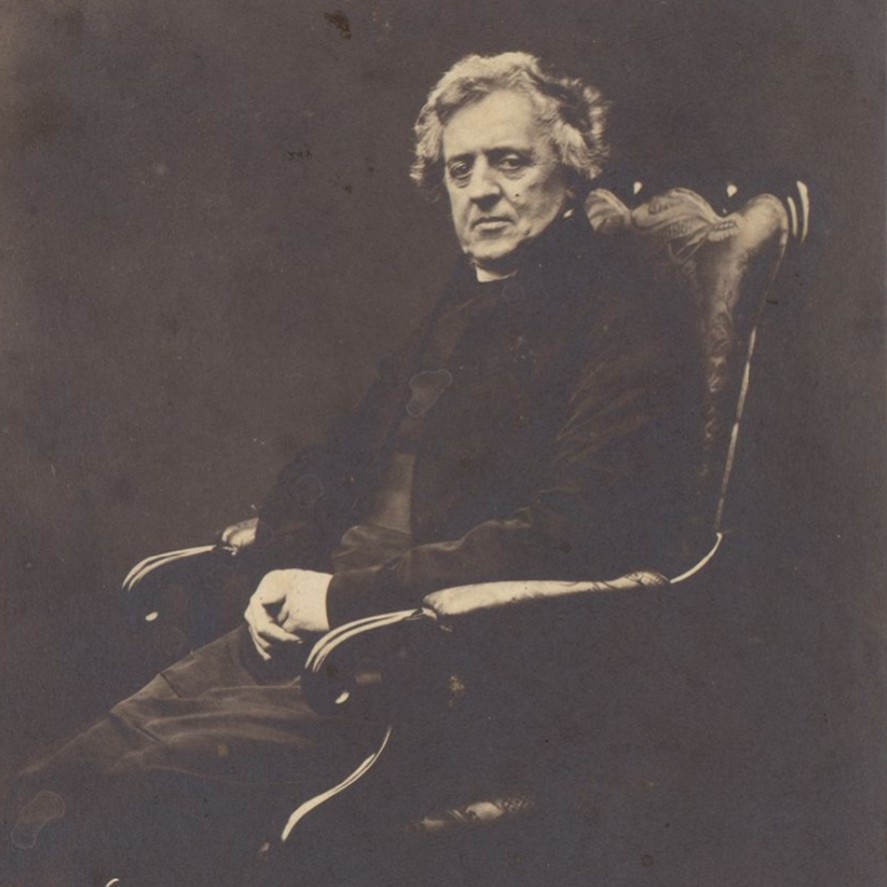
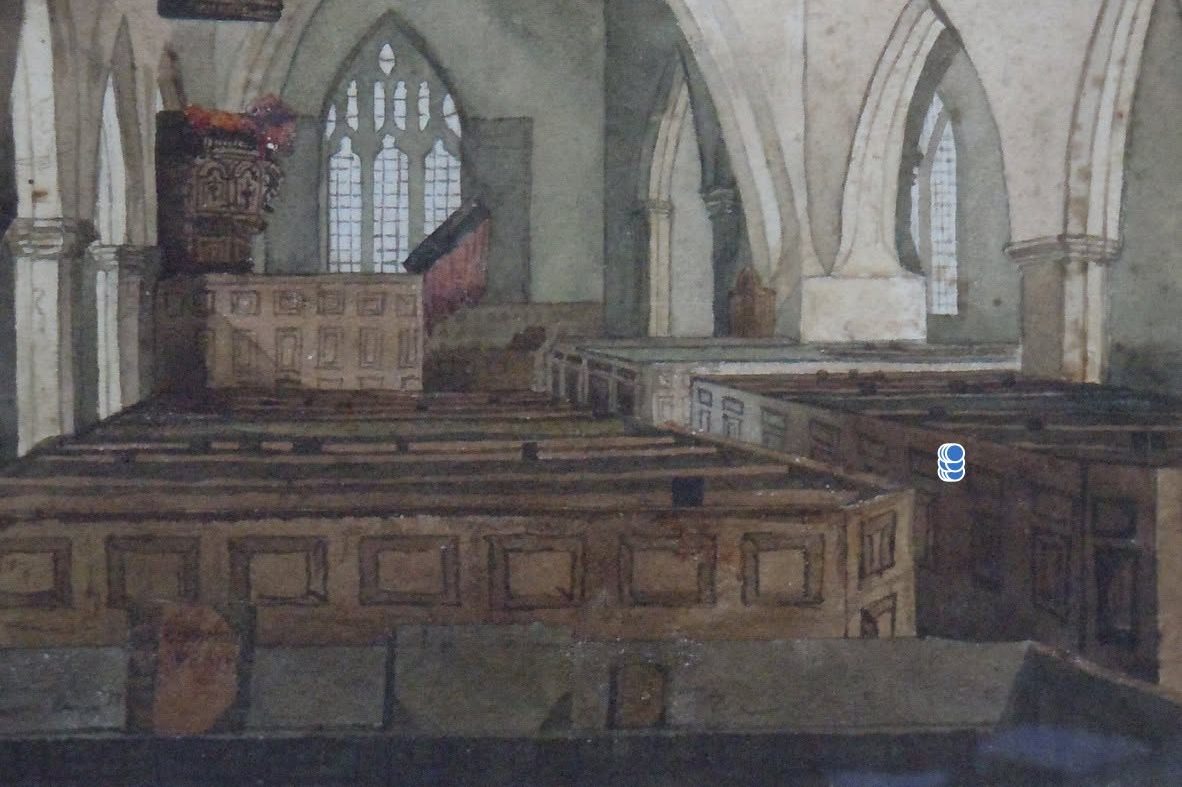
In 1839, shortly after Samuel Beckett Chadwick had moved into Daresbury Hall, Dodgson arrived at church to find a new brass plaque on what had been his pew.
He tried repeatedly to get a meeting with Mr Chadwick but was unsuccessful, eventually having to write the following letter:
“What I wished to explain about the pew was, that as it stands partly in the old chancel of the church the proprietor of Daresbury cannot claim it as his property, though he has a perfect right, if he wishes, to demand that the part of the seat which stands on his own ground shall be removed.
The fact is that when I first came here, there was no seat for the clergyman and, as seats were not saleable, the only thing to be done was to build one in the chancel, but the chancel being inconveniently small for the purpose Mr Heron [Rev George Heron], who thought with me that the clergyman ought to have a pew of his own, was kind enough to say that I was at liberty to carry the back of his seat into his part of the church in order to make it sufficiently wide. On this permission the pew was built as it now stands, and of course entirely at my expense.
General Heron [General Peter Heron, nephew of the above] advised that I should pay Mr Heron some nominal sum and that he should give me written acknowledgement that he gave up his property in the ground and Mr Heron promised to do so, but this was never done, and as the property has now come to your hands it rests entirely with you to say whether you will allow the pew to stand as it does.
If you do not object to this, I propose that a plate with the words Ministers Per should be set upon the door, and I do not thing any future owner of Daresbury would be inclined to alter the arrangement.”
He was a witty and amusing man and doubtless it is from him that his son learned the skill of ‘nonsense prose’. A letter from 1840 written to his young son about uproar he caused making some small purchases for the boy says:
“I will not forget your commission. As soon as I get to Leeds I shall scream out in the middle of the street ‘Ironmongers, Iron Mongers’; 600 men will rush out of their shops in a moment; fly fly in all directions; ring the bells, call the constables; set the town on fire. I WILL have a file and a screwdriver, and a ring, and if they are not brought directly, in forty seconds I will leave nothing but one small cat alive in the whole town of Leeds, and I shall only leave that, because I am afraid I shall not have time to kill it.
Then what a bawling and a tearing of hair there will be! Pigs and babies, camels and butterflies, rolling in the gutter together; old Women rushing up the chimneys and cows after them; ducks hiding themselves in coffee cups and fat geese trying to squeeze themselves in pencil cases; at last the Mayor of Leeds will be found in a soup plate, covered up with custard and stuck full of almonds to make him look like a sponge cake that he may escape the dreadful destruction of the town.”
He goes on in this vein for quite some time, concluding:
“At last they bring the things which I ordered and then I spare the town and send off in fifty wagons and under the protection of 10’000 soldiers, a file and a screwdriver and a ring as a present to Charles Lutwidge Dodgson from his affectionate Papa.”
In 1840, Lord Francis Egerton fitted up an old working boat as a floating chapel based at Preston Brook in the hopes of bringing the boatmen to church, and with Dodgson’s able orator skills, it’s 200 seat capacity was regularly overwhelmed with both boatmen and locals.
During his tenure, he oversaw the purchase of two stoves to help heat the church, as well as some minor alterations.
He was granted the Crown living of Croft in Yorkshire in 1843, and left Daresbury. The Parish presented him with a parting gift of “A massive and deeply chased candelabra, with branches of four lights, with two pairs of candlesticks corresponding, also snuffers and tray, together with a handsome knotted oak case for containing the whole; at a cost of something more than £140”
In 1852 he became a Canon of Ripon Cathedral and in 1854 Archdeacon of Richmond, but remained as the serving rector of St Peter in Croft. He started a school and taught at the village school, alongside his wife and a number of his children.
He died at Croft Rectory on 21 June 1868 after a sudden illness and was buried in the St Peter’s Churchyard there.